
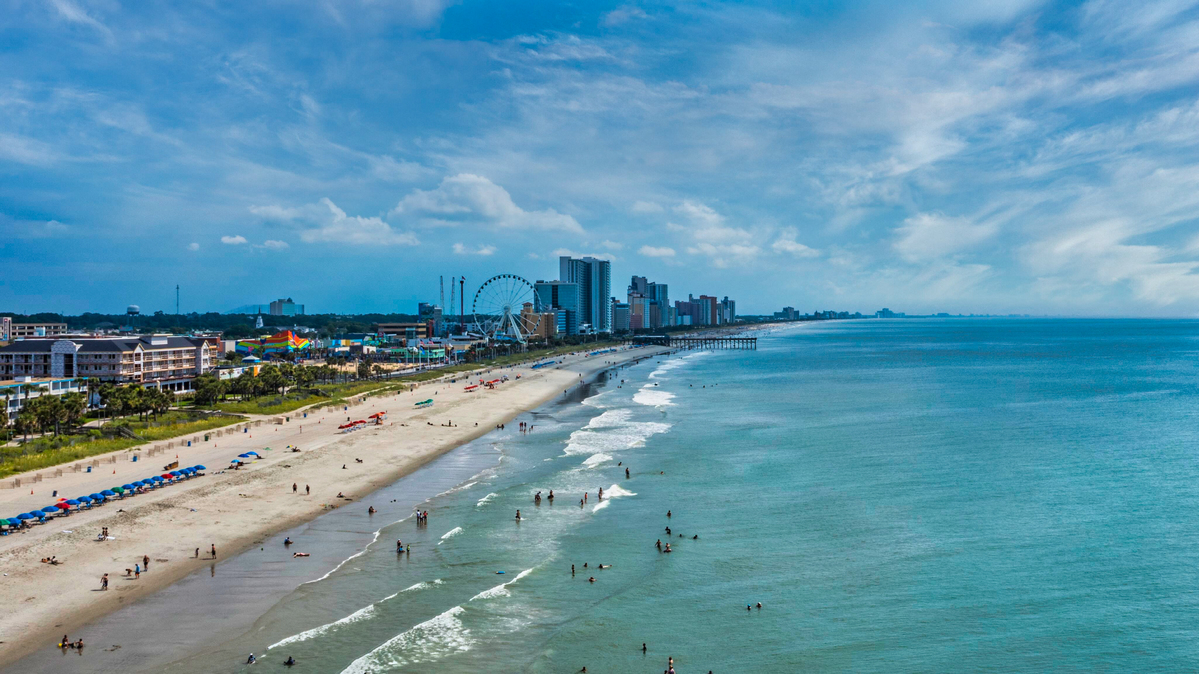
Photos of massive brown seaweed mats washing onto beaches have made headlines over the past week and the culprit is sargassum, a naturally occurring marine algae that plays an important role in the Atlantic Ocean ecosystem but can become an eyesore when large quantities wash ashore.
As reports continue from neighboring coasts, including Florida and the Caribbean, many South Carolinians are wondering... Could it happen here?
The short answer: it’s possible, but experts say South Carolina is far less likely to experience the large-scale accumulations currently impacting Florida beaches.
What Is Sargassum?
Sargassum is a type of floating brown algae that lives in the open ocean. Unlike many seaweeds that anchor themselves to the ocean floor, sargassum remains free-floating thanks to small gas-filled bladders that keep it buoyant.
It naturally circulates through the Atlantic Ocean in a route that often includes the Caribbean Sea, Gulf of Mexico, the Gulf Stream, and the Sargasso Sea, a region of the Atlantic named for the algae itself.
According to information from aquatic scientists with South Carolina’s environmental agencies, sargassum reproduces primarily through fragmentation, meaning pieces break off and continue growing while drifting with ocean currents and wind patterns.
Why Sargassum Doesn't Usually Wash Up in South Carolina
Experts say small amounts occasionally appear along South Carolina’s coast, but large-scale events remain uncommon.
Scientists with South Carolina environmental agencies note they have only occasionally seen scattered pieces wash ashore locally — not enough to significantly impact tourism or beach experiences.
There are several reasons South Carolina is less vulnerable:
- South Carolina is farther from the primary sargassum circulation zones.
- South Carolina coastlines are less directly exposed to the Gulf Stream.
- Ocean current patterns and storm tracks make large deposits less likely to reach South Carolina beaches in concentrated amounts.
That said, no coastal region is completely immune. Tropical systems, unusual current shifts, or especially active bloom years could occasionally transport more sargassum northward.
Is Sargassum Dangerous?
Fresh sargassum itself is not considered harmful to people. However, when large amounts sit on beaches and begin decomposing, they can produce an unpleasant sulfur-like odor that many beachgoers dislike.
While it may not look appealing washed onto shore, sargassum is actually one of the ocean’s most important floating habitats. Marine scientists consider it a nursery habitat because many juvenile fish and sea turtles use it for shelter and protection before moving into reef systems as adults.
Marine researchers emphasize that while beach accumulations can create temporary inconvenience, sargassum remains a critical part of Atlantic Ocean ecosystems.
Tracking Sargassum
Earlier this year, officials with NOAA announced that their Sargassum Inundation Risk tool (SIR) has been upgraded to offer daily reports on the location and risk that brown floating algae could wash ashore along coastal areas in the Caribbean, Florida, Gulf of America, and northern South America. The SIR now provides a daily report with a resolution of approximately a half mile (one kilometer). Previously, these reports were issued weekly with a resolution of three miles (five kilometers).
At this time, South Carolina is not included in the SIR tool.
To view live webcams from the Grand Strand, check out visitmyrtlebeach.com/web-cams.