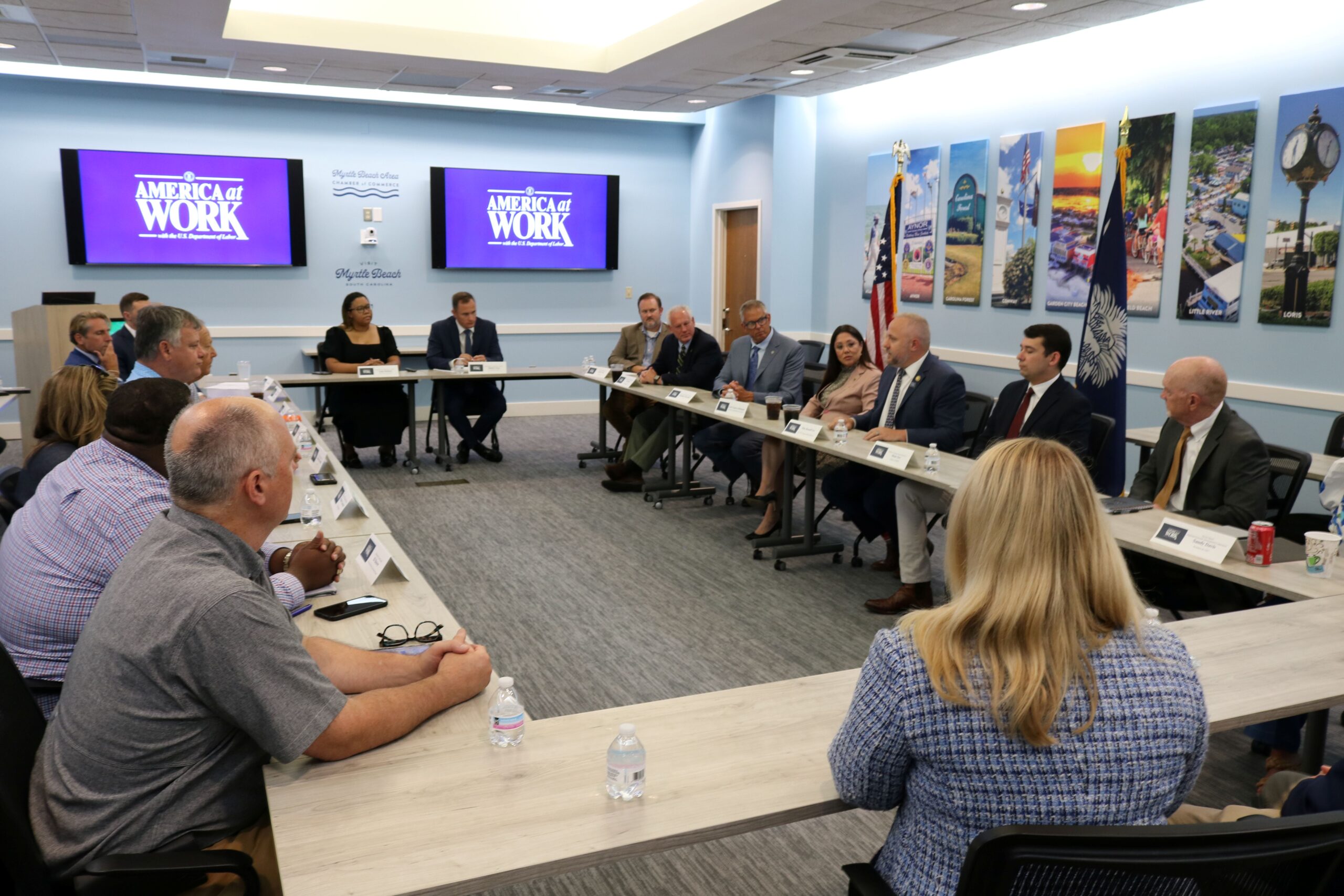
On July 29, 2025, U.S. Rep. Russell Fry (R-S.C. 7th Congressional District) hosted U.S. Secretary of Labor Lori Chavez‑DeRemer at the Myrtle Beach Area Chamber of Commerce for a joint press conference along with a meeting with local and state leaders.
In March of this year, Chavez-DeRemer was sworn in as the 30th Secretary of the U.S. Department of Labor. During her visit to Myrtle Beach, she emphasized her interest in learning about the Grand Strand’s workforce needs.
“I want to understand exactly what you need from the Department of Labor, to understand what the Chamber of Commerce needs, what do your businesses need,” she said, noting that by receiving this input, she can work to create initiatives around them, including re-skilling and up-skilling the workforce.
Rep. Fry added, “We’re meeting with industry leaders in the Grand Strand and the Pee Dee, talking about the things that matter to them and how we can make smarter decisions, smarter business decisions, not only for the next four years, but really the next generation.”
The congressman also reiterated his support for an interstate connector in Horry County, which would not only support job creation, but would act as a critical evacuation route.
Following their public remarks, Chavez-DeRemer and Fry met with local and state leaders in the chamber boardroom to discuss the Grand Strand’s specific labor priorities. The chamber’s advocacy team noted key points about the Myrtle Beach area, including:
- Fastest growing area in the nation with a 30% population growth in the past 8 years;
- Below-average unemployment rate of 4.1% recorded in May 2025;
- Projected 10% increase in jobs by 2032;
- Fastest-growing U.S. metro area for seniors; and
- Top industries of tourism, education, aerospace, manufacturing, technology, healthcare and marine.
“We appreciated the opportunity to host a meeting between Secretary Chavez‑DeRemer, Congressman Fry and other leaders and to put a spotlight on our community. This was an opportunity to showcase the strengths of our tourism-driven economy, our world-class educational systems and vibrant offerings that provide an enhanced quality of life,” said Jimmy Gray, President of the Myrtle Beach Area Chamber of Commerce. “We also engaged in constructive conversations around workforce diversification, attainable housing, childcare, visa reform and other considerations for supporting our employees and business growth.”
Both the secretary and congressman commented on newly passed federal legislation like the “One Big Beautiful Bill” designed to offer tax relief for workers and employers along with boosting domestic jobs and infrastructure. They also emphasized expanding hands-on training, ensuring workplace safety and promoting living wages.
Tourism Supports Thriving Job Market In Horry County
Did you know that about half of our region’s workforce is directly tied to tourism. According to data from CCU and Department of Labor:
- 49% of all Grand Strand jobs — 82,332 out of 168,012 — are tourism-supported.
And those jobs aren’t just seasonal. CCU economists estimate that 80% of local tourism positions are year-round, full-time.
Here’s a breakdown of the types of jobs that tourism provides in Horry County:
- Accommodation & Food Services: 31,135 jobs
- Retail Trade: 26,969 jobs
- Arts, Entertainment & Recreation: 5,845 jobs
- Real Estate & Rentals (incl. short-term rentals): 5,176 jobs
- Transportation & Warehousing: 4,170 jobs
- Administrative & Support Services: 9,037 jobs
What's more, while these industries make up the bulk of tourism’s direct workforce, tourism also helps to support countless jobs indirectly.
When tourism businesses thrive, they purchase goods and services from other local companies. This spending supports jobs in:
- Food suppliers & distributors: providing produce, seafood, and beverages to restaurants and resorts.
- Laundry and cleaning services: handling hotel linens, uniforms and event spaces.
- Maintenance & repair companies: keeping facilities, attractions and vehicles operational.
- Marketing, printing and design firms: producing menus, signage, promotional materials and event branding.
- Accountants, attorneys, and consultants who provide compliance, legal, and strategic guidance.
- IT and tech providers who manage booking systems, cybersecurity, and website operations.
- Transportation and logistics firms that move goods and coordinate travel packages.
There's also the induced jobs from employee spending. Tourism employees spend their wages locally on groceries, healthcare, housing and entertainment, which sustains jobs in areas such as:
- Healthcare
- Education
- Real estate and home construction
This ripple effect is known as the multiplier effect: visitor spending circulates through the economy, supporting additional layers of employment.